







.png)

Earlier this year, we introduced Programmatic CRM, a new approach to owned-channel marketing focused on making better customer decisions, not simply creating more campaigns, segments, and journeys.
Since then, we've explored what Programmatic CRM means for marketers and how AI creates an opportunity to rethink the CRM operating model. Today, we're introducing new capabilities across AI, message creation, mobile, and measurement that make Programmatic CRM easier to put in practice across Da Vinci and Studio.
Connect Enterprise AI Tools to Da Vinci
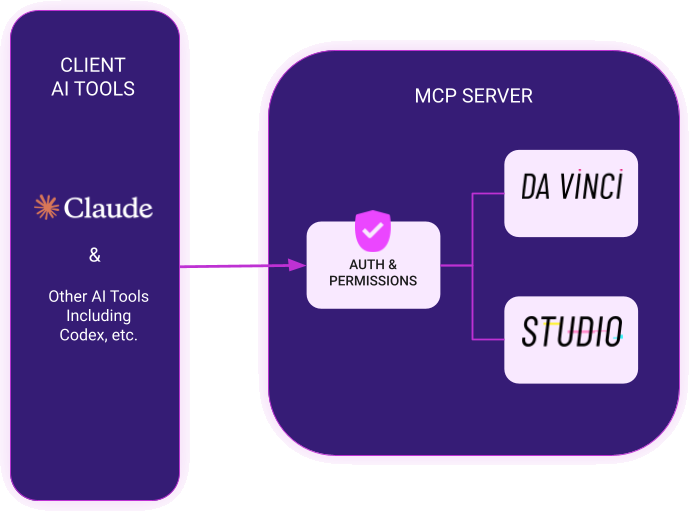
AI is quickly becoming part of how marketers analyze performance, develop creative, and execute campaigns. Enterprise teams need a secure way to connect AI tools they already use with their marketing platforms, data, and workflows.
MCP Server (Early Access)
- What it does: Model Context Protocol (MCP) provides a standardized way for AI tools to connect with business platforms. The new MCP Server creates that connection for Da Vinci.
- Compatible AI tools: Marketers can work with Da Vinci through tools such as Claude, Cursor, and OpenAI-powered assistants without leaving the environments they already know.
- Context-Aware: Ground every interaction in your account—your data, configurations, permissions, brand guidelines, and business logic. Your AI understands your environment and applies the right context and guardrails to take relevant, account-specific actions without repetitive setup.
- Example actions: A marketer could ask Claude to duplicate last month’s newsletter campaign with a new send date or enable auto-scheduling across all always-on nurture campaigns in a single request.
- Why it matters: The MCP Server creates an access layer for AI tools to work with Da Vinci across the campaign lifecycle—helping organizations build on their existing AI investments.
We are also introducing assistants that make everyday work in Da Vinci faster and easier.
Analytics Assistant (GA Beta)
- What it does: Helps marketers move from seeing performance to understanding it. They can ask questions in natural language and receive answers grounded in the page, date range, and filters already in view.
- Example insights: The assistant can surface what stands out in the data, such as top and bottom performing campaigns, creatives, subject lines, or segments, and explain sophisticated measures like Content Effectiveness Score (CES) and Average Order Value (AOV) Effectiveness in plain language.
- Trust and transparency: Each answer cites the source and date behind it, and remains tied to the exact dashboard context. When the available evidence is not strong enough, the assistant clearly flags uncertainty instead of guessing or presenting assumptions as fact.
Subject Line Assistant (now GA)
- What it does: Helps marketers quickly create campaign-ready subject lines grounded in their content and brand. It uses established guidance for voice, style, and words to avoid alongside the campaign content.
- Marketer controls: Marketers can ask it to shorten, rephrase, or adjust the tone, then keep, remove, archive, or select a primary option.
- Why it matters: The assistant accelerates the repetitive work while the marketer makes the final decision.
Build the Complete Message Together in One Workflow
Smarter decisioning is more valuable when marketers can quickly turn it into a launch-ready message. As messages combine static elements, content selected by Da Vinci, and real-time Studio experiences, the underlying template must define where each belongs. When marketers cannot create or update that structure themselves, even a simple change can introduce additional delays and handoffs.
Message Builder (now GA)
- What it does: Provides a drag-and-drop workflow for building and maintaining the underlying email template.
- Template structure: Marketers can define where static elements appear, where content selected by Da Vinci is inserted, and where real-time experiences created in Studio are included. Each content type continues to be created in its respective workflow.
- Why it matters: Marketers gain clearer visibility into the complete message and a more self-service way to create and update the template.
Bring Personalized Imagery to RCS Campaigns
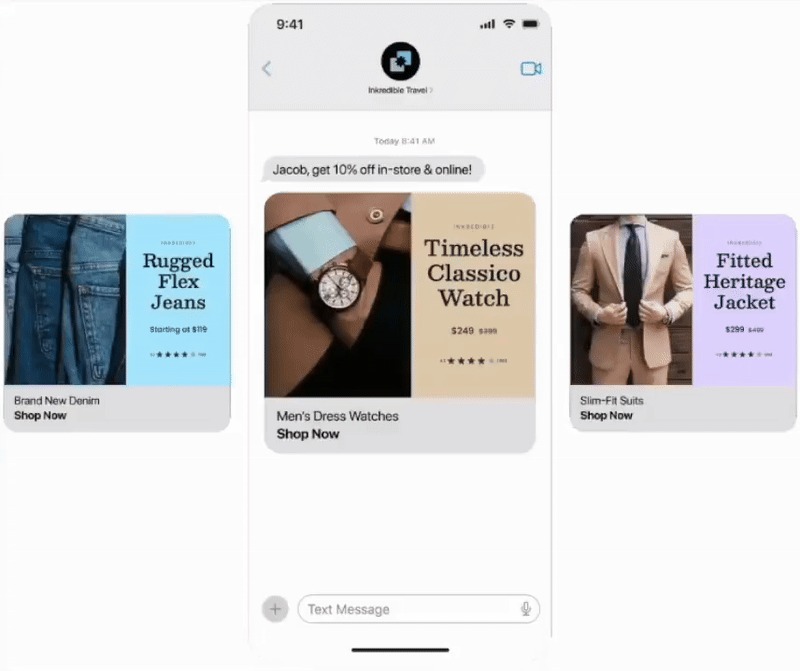
RCS gives marketers more creative flexibility than traditional text messaging, including high-resolution imagery, GIFs, and more expansive messages. But adding a channel should not mean building a new personalization strategy from scratch.
Image Personalization to RCS campaigns (now GA)
- What it does: Brings dynamic imagery to a growing mobile channel. Instead of relying on one static image for an entire audience, Studio can generate a unique visual experience for each individual based on customer-specific data and real-time context.
- Why it matters: Because the capability builds on Studio’s existing approach to Image Personalization, marketers can extend the strategy they already use across other owned channels to RCS instead of creating an isolated creative track.
Expanding the Foundation for Programmatic CRM
Together, these capabilities make Programmatic CRM more practical across four key areas:
- AI access and assistance: Connect enterprise AI tools to Da Vinci and give marketers built-in support for performance analysis and subject-line development.
- Message structure: Build and maintain the email templates that define how static, Da Vinci-selected, and real-time Studio content come together.
- Cross-channel personalization: Extend individualized imagery to RCS without creating a separate personalization strategy for the channel.
- Measurement and data access: Make event-level interaction data easier to retrieve and use in downstream analytics and business workflows.
Marketers remain in control of the strategy and guardrails. Movable Ink helps make the decisions and execution behind that strategy more intelligent at scale.
.png)
.png)
.png)
.png)
.png)


